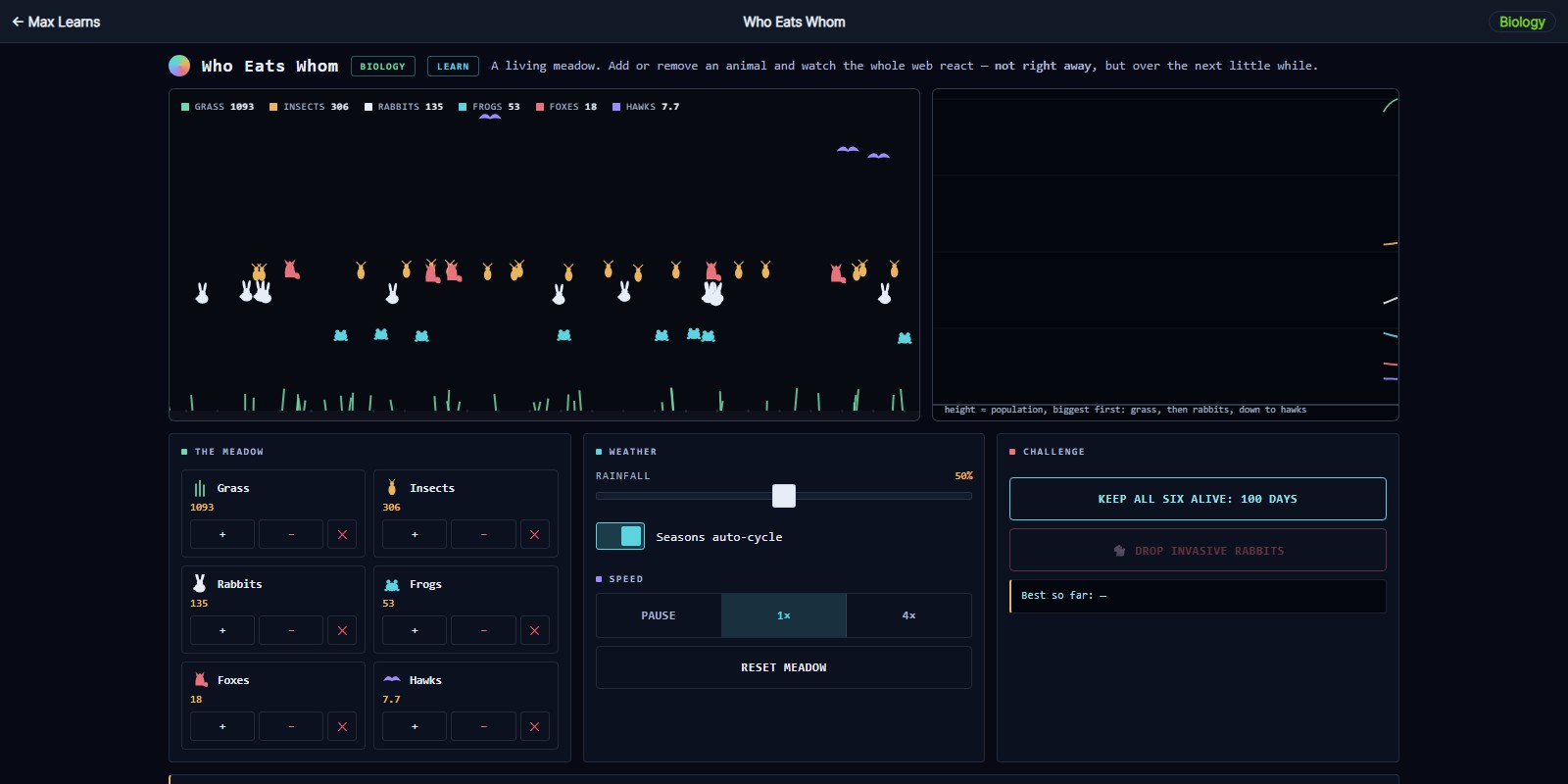
Who Eats Whom
Pull one thread and the whole web moves
take the foxes out of a meadow and watch what happens to everything else
what this teaches: food webs, predator and prey, ecosystem balance, population cycles
What you'll learn
- That every living thing in a habitat is connected to the others through what it eats
- Why removing a predator does not simply mean more prey forever
- That effects in nature arrive late, long after the cause
- Why populations rise and fall in waves instead of settling down
- What decomposers do with everything that dies
How to play
- Watch the meadow run on its own for a minute, and see the graph beside it.
- Drag a creature out of the scene to remove some of them, or drag one in to add more.
- Move the rainfall slider and the season switch and see which animals notice first.
- Try the challenge — can you keep all six species alive for 100 days?
FAQ
What age is this for?
Around 8 and up, roughly 3rd through 7th grade. Younger children enjoy adding and removing animals and watching the meadow react, even before the graph makes sense.
Do I need to install anything?
No. It runs in any web browser, it is free, and there is no signup.
Is the simulation realistic?
The numbers are simplified so a cycle takes seconds instead of years, but the maths is the same predator-prey model ecologists actually use, which is why the populations chase each other in waves.
For parents and teachers
The lesson here is delay: most children predict that removing foxes means more rabbits, and stop there. The graph shows the second half — the rabbits overshoot, strip the grass, and crash. Worth watching together and pausing at the peak to ask what happens next. Supports NGSS 5-LS2 and MS-LS2-4.
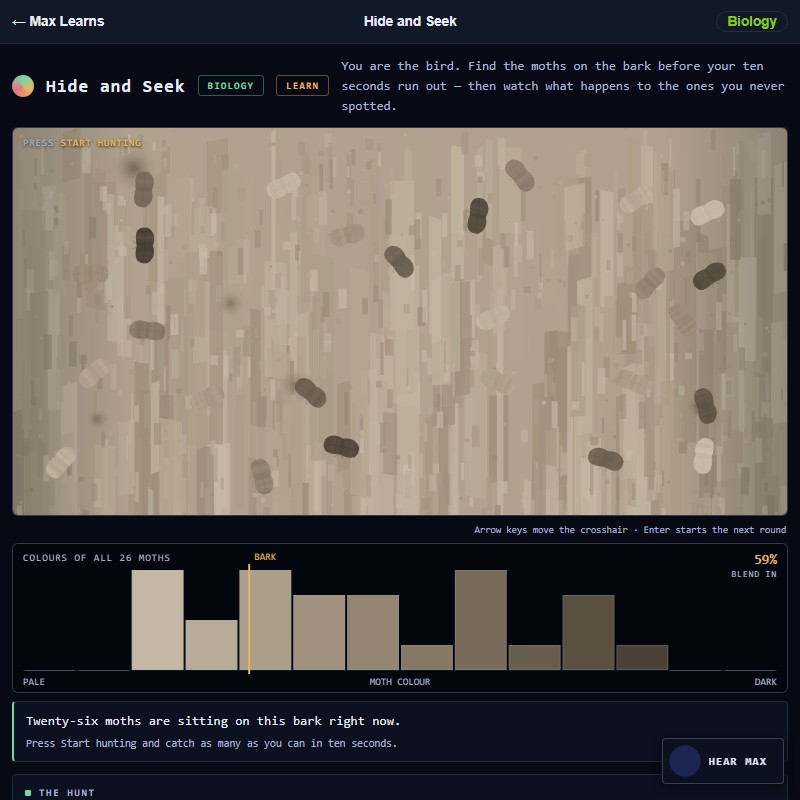 Hide and Seek
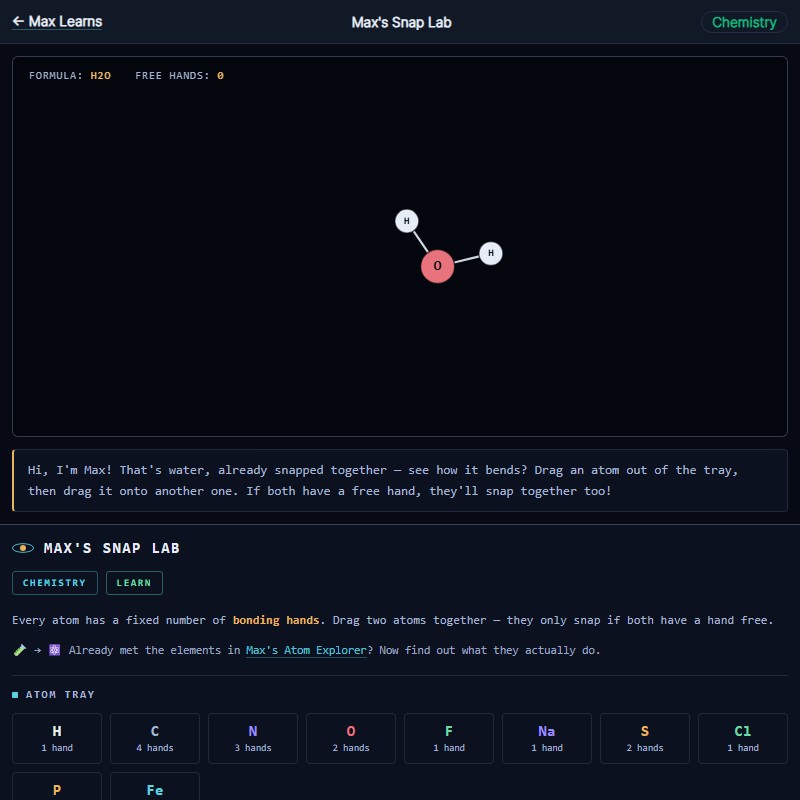 Max's Snap Lab
 Max's Snowflake Lab