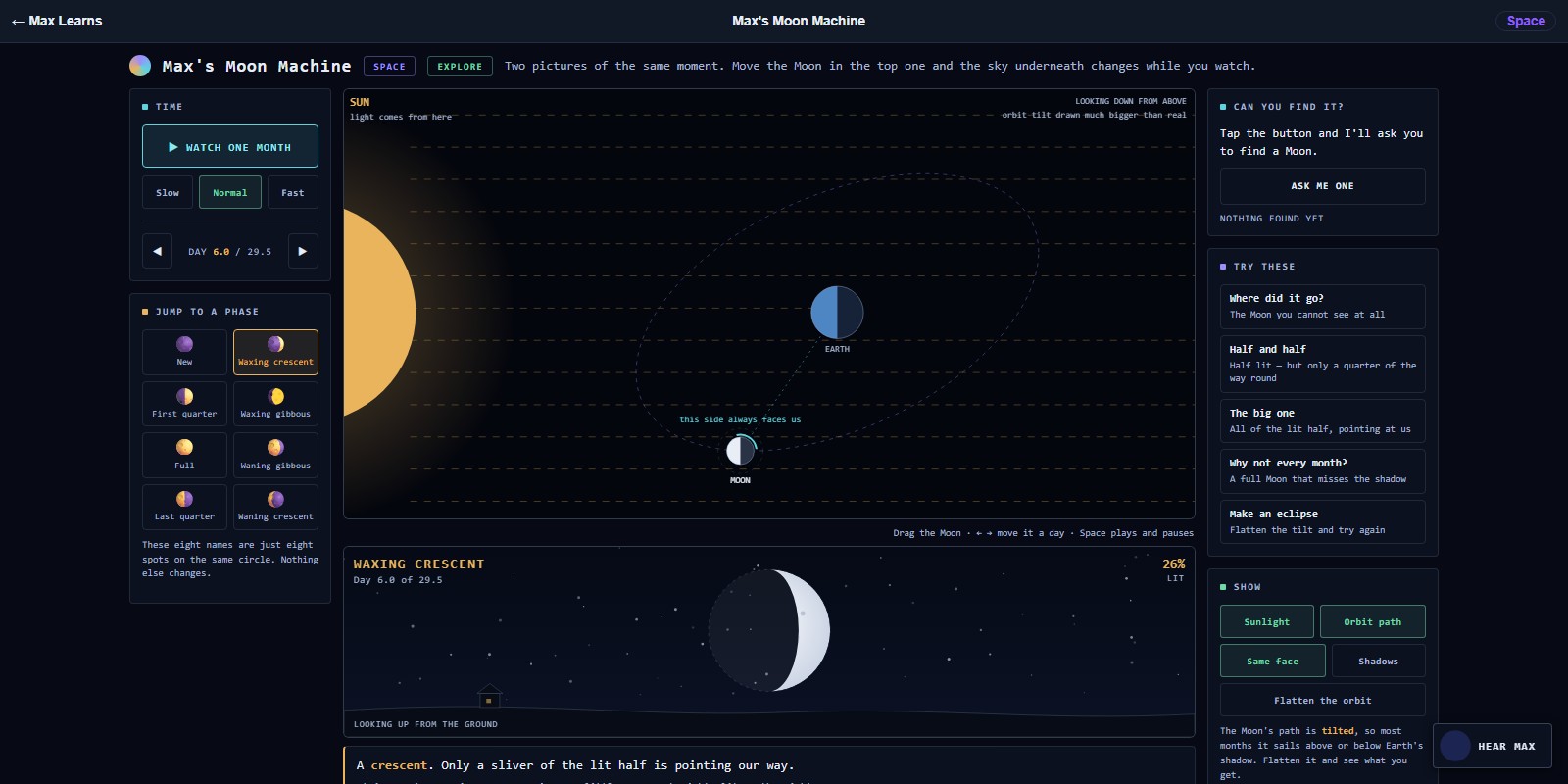
Max's Moon Machine
Two pictures of the same moment, side by side
drag the Moon around Earth and watch tonight's sky change while you do it
what this teaches: why the Moon has phases, the Moon never changes shape, the same face always points at us, why eclipses are rare
What you'll learn
- That the Sun lights exactly half of the Moon at all times — that half never grows or shrinks
- That a phase is simply how much of that lit half we happen to be looking at from here
- That the phases are not Earth's shadow falling on the Moon, which is the thing nearly everyone is taught wrong
- That the same face of the Moon points at us the whole way round its orbit
- That the Moon's path is tilted, which is why it usually sails past Earth's shadow instead of into it
How to play
- Drag the Moon slowly around the circle and keep one eye on the sky picture underneath.
- Press Watch one month and let it run, or step forward one day at a time.
- Tap a phase name to send the Moon straight there, then look at what the sky does.
- Turn on Shadows, then Flatten the orbit, and take the Moon round to full.
FAQ
What age is this for?
About 6 and up. A small child can drag the Moon and see the sky change with no reading at all, while an older one can chase down the eclipse question and the tilt of the orbit.
Do the Moon's phases come from Earth's shadow?
No, and that is the misconception this game exists to head off. The Sun lights half the Moon all the time. A phase is just how much of that lit half is turned our way. Earth's shadow only touches the Moon during a lunar eclipse, which happens roughly twice a year, not every month.
Why isn't there an eclipse every month?
Because the Moon's path is tilted a few degrees, so at full Moon it usually passes above or below Earth's shadow rather than through it. Turn on Shadows and watch it miss, then use Flatten the orbit and watch what happens instead.
Is the Moon drawing accurate?
Yes. The lit shape is worked out from the angle between the Sun, the Earth and wherever you have just put the Moon — the same one number drives the top view, the sky view, the phase name and the eclipse. Nothing is a stored picture.
For parents and teachers
The moment worth waiting for is a slow drag from new Moon to full while your child watches the bottom picture. Nearly every adult carries the 'Earth's shadow' explanation around, and it is very hard to shake once it sets — seeing the lit half swing towards you undoes it in about ten seconds. Follow it up by going outside and finding the real Moon, then coming back and putting the model where it needs to be to match.
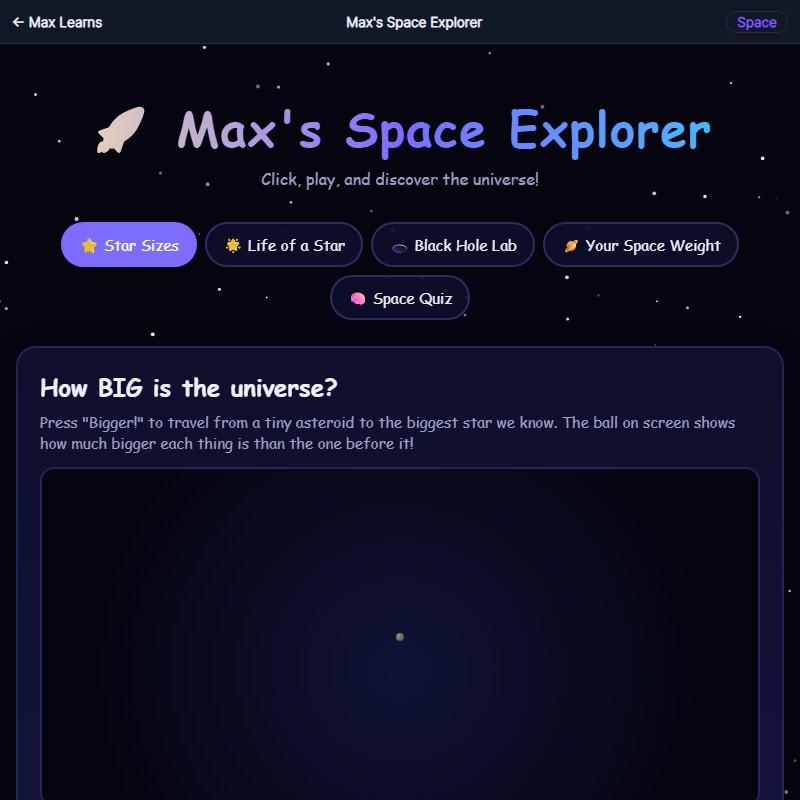 Max's Space Explorer
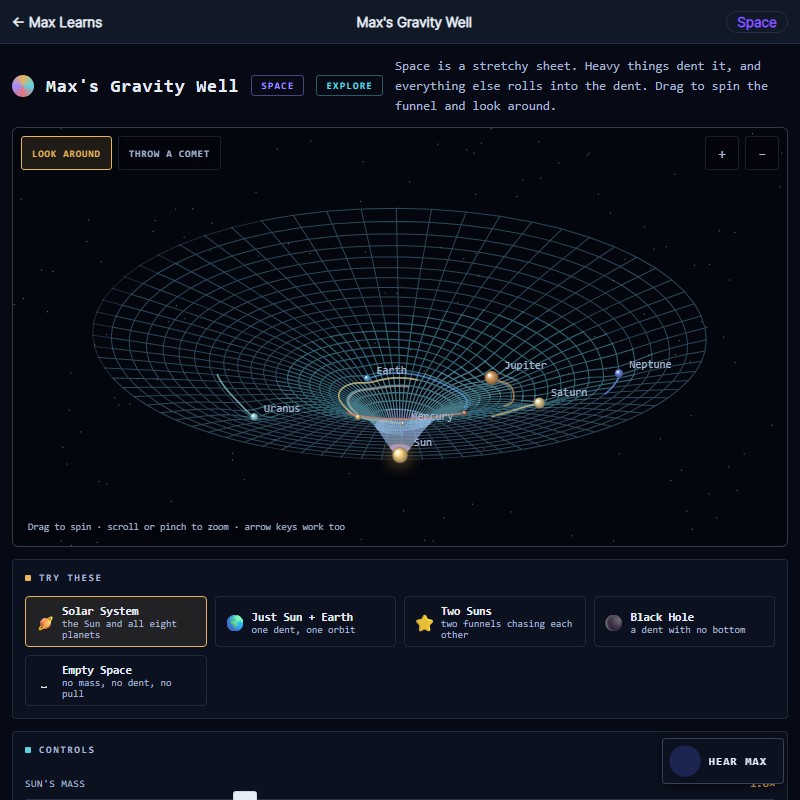 Max's Gravity Well
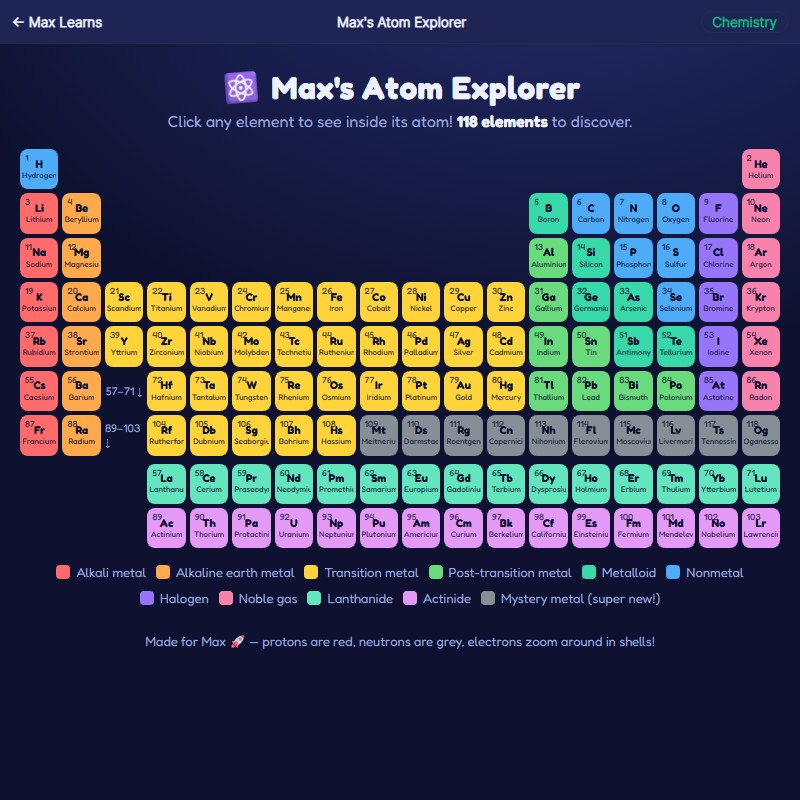 Max's Atom Explorer