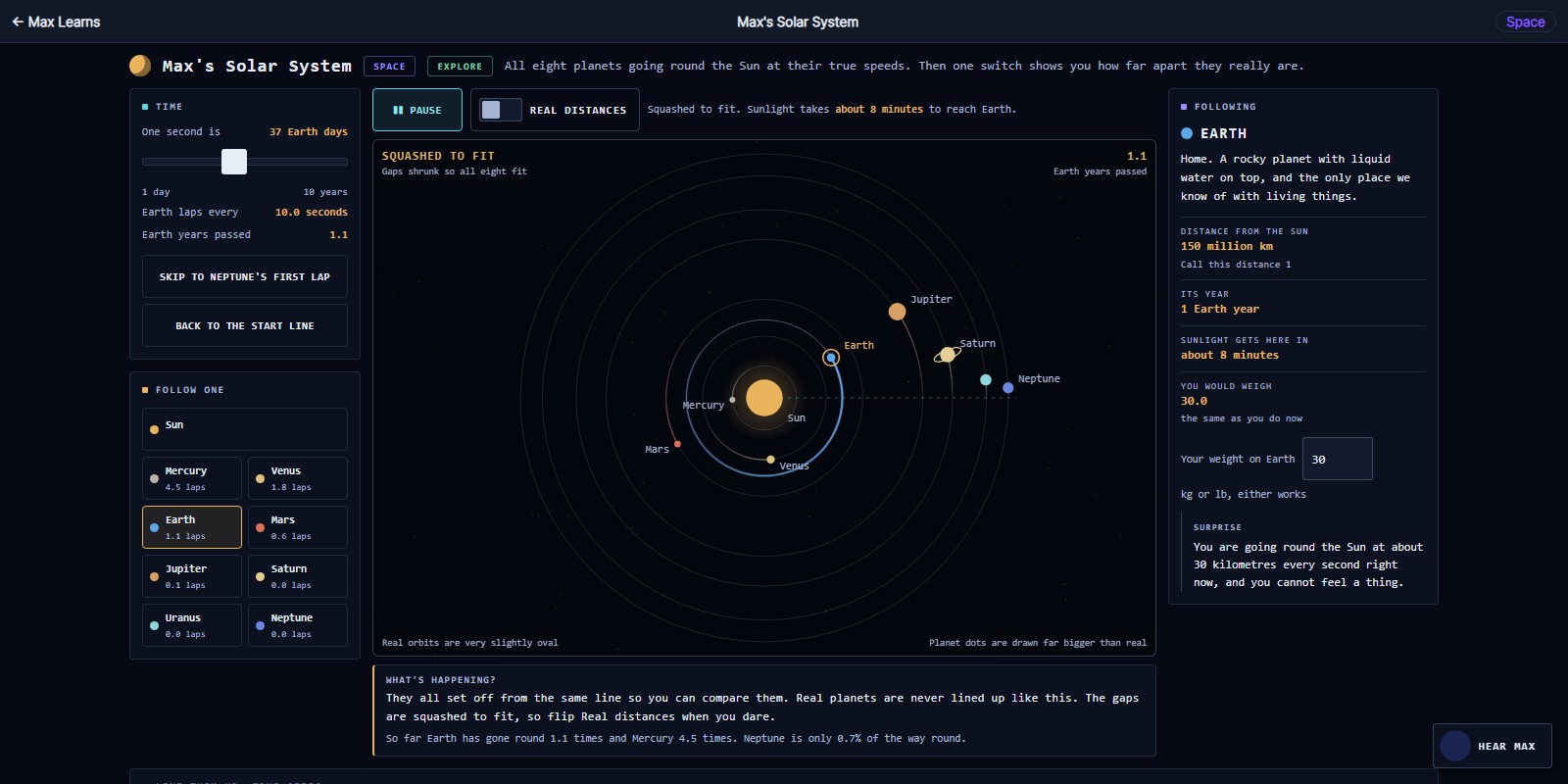
Max's Solar System
True speeds, true sizes, one big surprise
race the planets round the Sun, then flip to real distances and get a shock
what this teaches: the eight planets in order, closer planets orbit faster, how far apart planets really are, how big they really are
What you'll learn
- The eight planets in order, and one surprising thing about each
- Why planets closer to the Sun go around so much faster
- How far apart the planets really are, compared with the pictures in books
- How big the Sun and planets really are next to each other
How to play
- Tap any planet to follow it and hear what makes it special.
- Drag the time slider to speed the years up or slow them down.
- Flip Real distances and watch what happens to the inner planets.
- Try Who gets round first? and guess the winner before the race.
FAQ
What age is this for?
It is built for around age 7 and up, roughly 2nd through 6th grade. Younger children enjoy tapping planets and racing them; older ones get more from the real distances and sizes.
Are the speeds and distances real?
The speeds are real relative to each other. The distances are squashed to fit until you flip Real distances. The planet dots stay bigger than true size so you can still see them, and the game tells you that.
What about Pluto?
Pluto is a dwarf planet, so it isn't one of the eight here. It orbits out beyond Neptune and takes about 248 Earth years to go round the Sun once.
Do I need to install anything?
No. It runs in any web browser, including on tablets. It is free, and there is no signup or account.
For parents and teachers
This gives children a feel for scale before they meet the numbers, a useful preview of the NGSS MS-ESS1-3 idea about scale in the solar system. It pairs naturally with Max's Moon Machine and Max's Gravity Well.
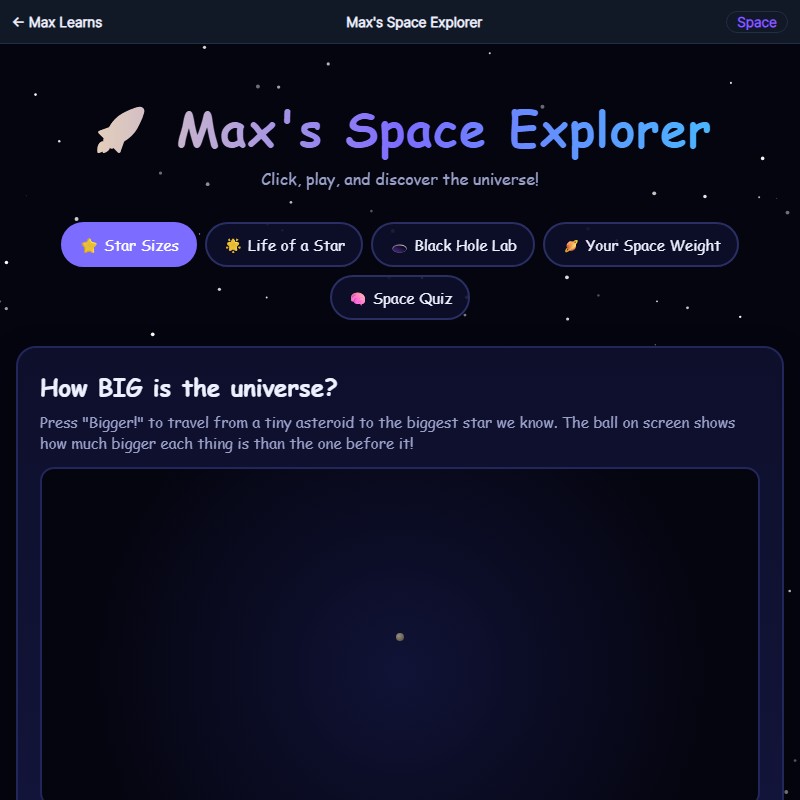 Max's Space Explorer
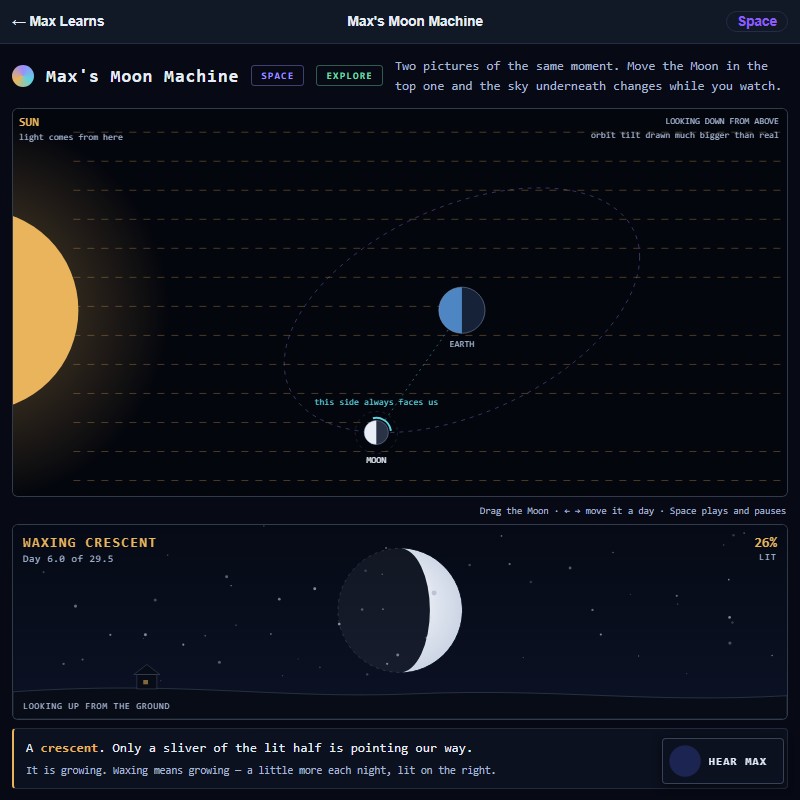 Max's Moon Machine
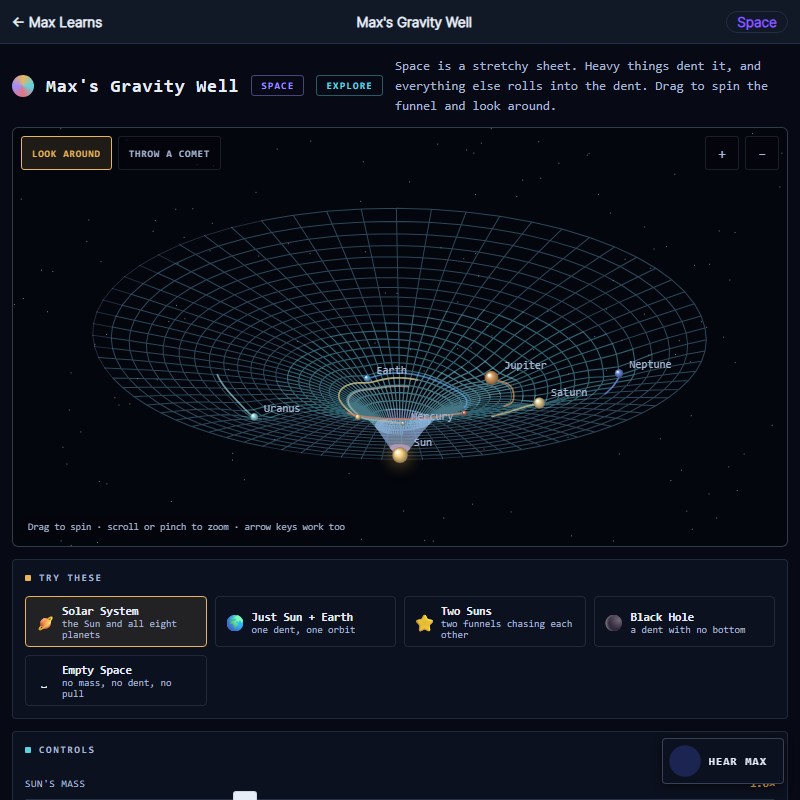 Max's Gravity Well